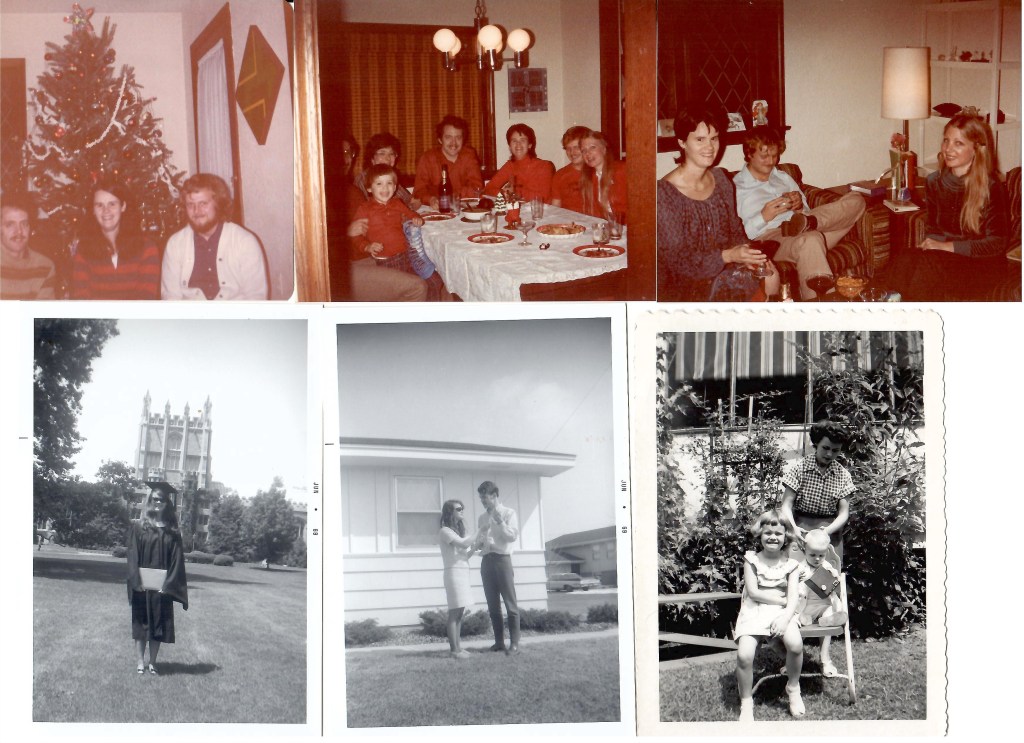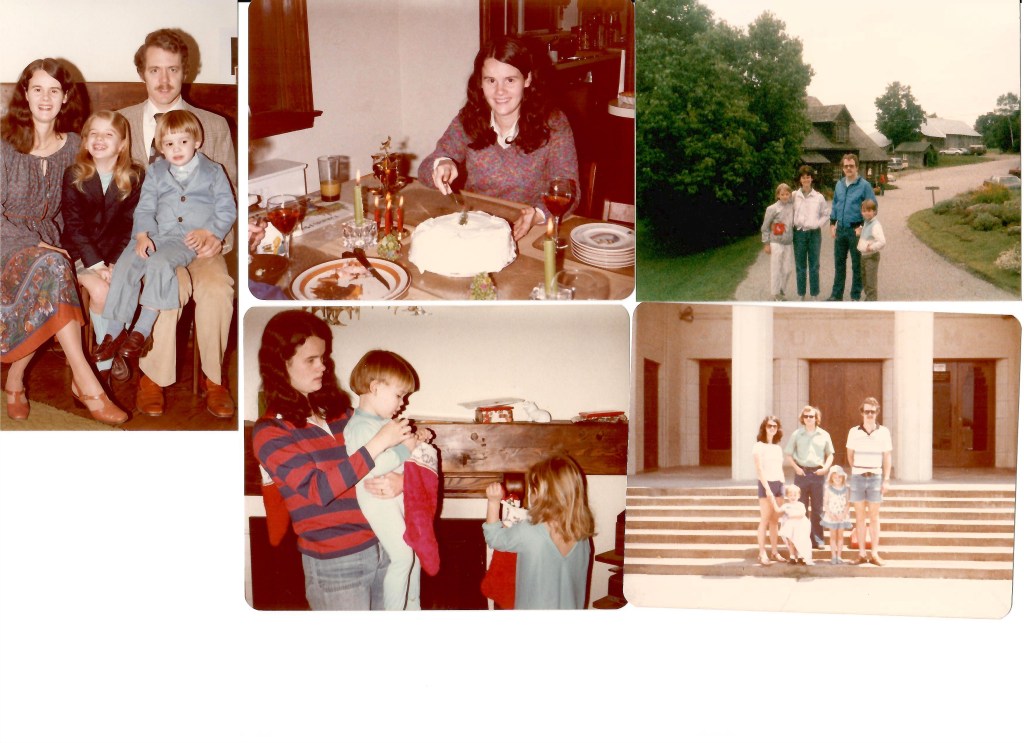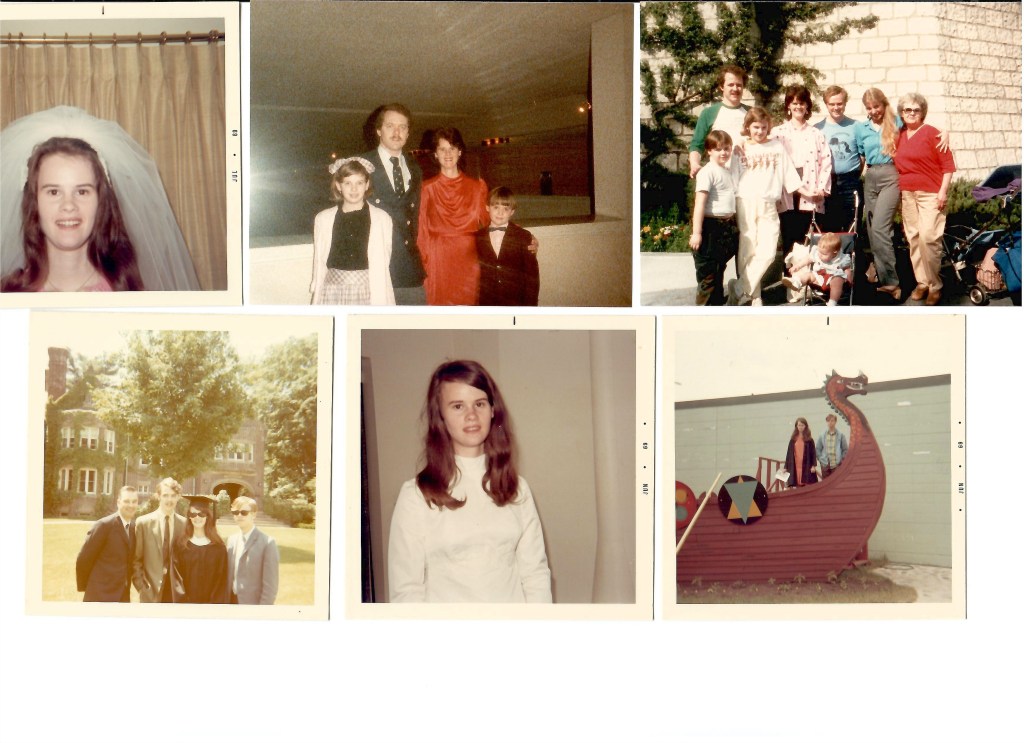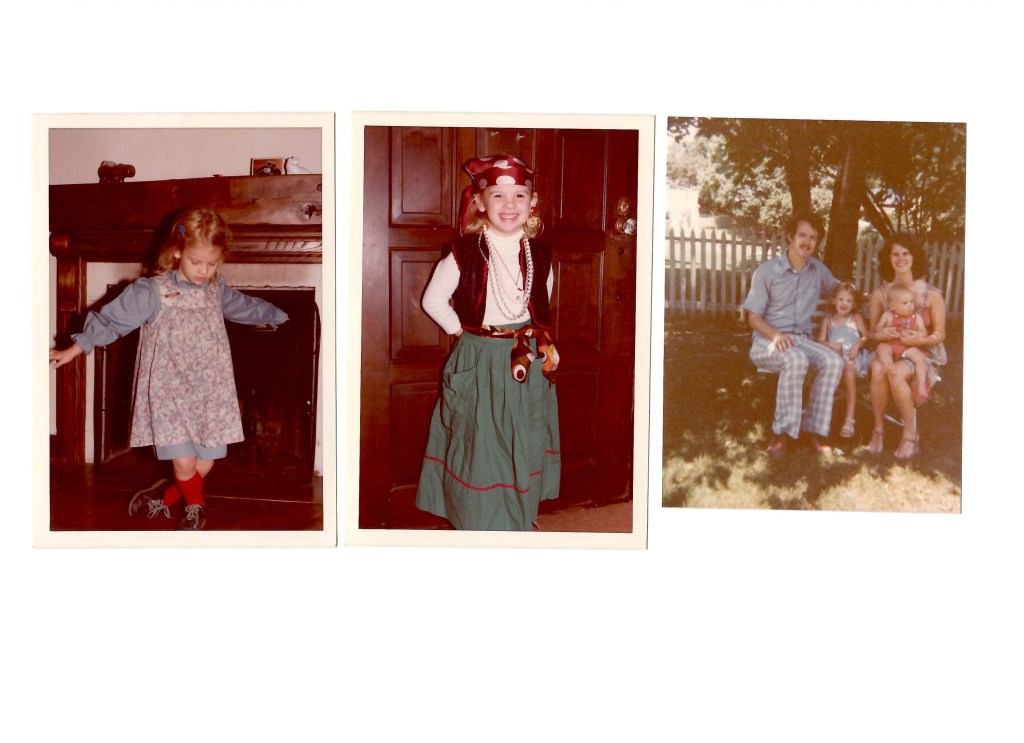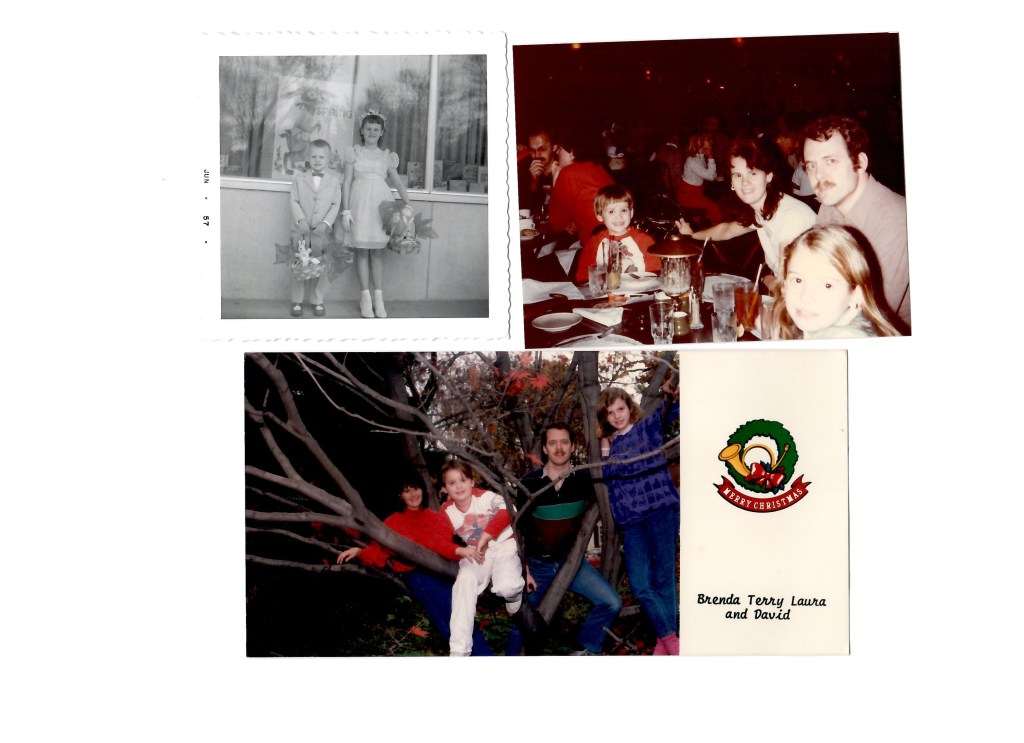
Because of the boxes of stuff I retrieved from my late mother’s house, I have become the custodian of the Westfahl family history. I am posting five items here: my mother’s 1944 incomplete valedictorian speech (even though she was unfairly deprived of that honor and the priviliege of delivering that speech); my father’s memoir of his experiences as a soldier in World War II; an essay I wrote about my mother, written for my granddaughter Serena, but my wife thought it was too depressing to share; a recent entry about my childhood experiences; and some family photographs, mostly of my sister and her family. There is also the article about Brenda that I posted to the File770 website:
1944 Valedictorian Speech
“Service to the Nation”
by Thelma Westfahl
edited by Gary Westfahl
[Editor’s note: I have transcribed this handwritten manuscript exactly as written, though I have silently changed a few punctuation marks and added a few bracketed words. I have reproduced the language that was underlined, which often seems random but may have been intended to indicate passages that she felt needed to be delivered with special emphasis. A written comment, “Slower,” suggests that she rehearsed this speech in front of a listener and received feedback. The manuscript ends abruptly, showing that one or more additional pages were not saved.)
Each student graduating here tonight, though they may not realize it, holds a great stake in the future as a leading citizen of their country and as an individual. Down through the years they have prepared themselves for the day when they could go forth into the world on their own, to face whatever may come. Step by step they have climbed the ladder which leads to success; now will they go even higher or fall downward? The education they have received will enable them in many ways to participate in [the] dawn of the new tomorrow through the great world of service.
Service means something that words can’t express. It’s the dedication of your heart, mind and body to the helping of the needy. The one who serves others receives the greatest of blessings. After the war, many adjustments will have to be made, [and] things will be topsy-turvy all in our country. All the boys will come marching home, [and] the world will be an entanglement of happiness and sorrow. Our government will need our help as well as the needy ones at home. We students here tonight will have to become even better citizens than we are; we will have to help to make our gov. a democracy all over again with even a firmer foundation than ever before.
We have laughed – we have played along through school not realizing the privileges we were enjoying, just taking things as they came; now we have to face the serious side of life.
The dawn of a new tomorrow will be soon – the sun is already peeping over the crest. Will we be able to participate in our gov. affairs and to carry on as preceding generations have done? We have all lived in America for so long now, and enjoyed so many privileges, [so] it’s time for us to want to render the very best of service to our nation. We want to render such strong unforgettable services that will make our gov. so strong that it can never be crushed out. We want to render priceless services that will leave deep, imprinted footsteps in the soil of our nation for others to follow.
Since the creation of the Earth man’s education has rendered untold benefits to the world. This service will continue to prosper today, to lead civilization on to even a higher goal. Education is universal here in America. Poor and rich alike can take advantage of the education offered them if they so desire. Education can be had at little or no cost without precedent in our history. Education is a big word; it means a lot in many different fields. Education leads to security service, service leads to security for all in America. What would people in foreign countries others give if only they could live in peace and comfort far away from the heartbreaks of war???
We speak of the word service so much. Just how can we serve our nation??? …. First, we can serve our nation by being intelligent citizens. We should know all about what is going on in our country. Keep up with current events, read newspaers, listen to [the] radio, and think for yourself. We should want to know why various things are advocated by our gov. We should be proper citizens, citzens that Uncle Sam will be proud to claim. Vote … use your franchise, vote intelligently and for the best man. Today if we don’t have men in office who will fulfill their duties to the best of their ability, it’s our fault; vote for the best man and vote intelligently!!
Next, we should abide by all our gov. laws, not first out of a desire to “get by” but out of a desire
*****
World War II in the Pacific: One Soldier’s Memoir
by Wesley Westfahl
edited by Gary Westfahl
(Editor’s note: my father graduated from high school in Tigerton, Wisconsin, in 1944, soon joined the Marines, and after basic training served in the final year of the war in the Pacific. Like many veterans, he never spoke about his experiences, but late in life, he drafted this memoir for my sister Brenda about his experiences and later sent me a Xerox copy. Other than updated renderings of the names of places and people, correcting a few grammatical errors, and adjusting some punctuation, I have made no substantive changes to his handwritten text.)
Brenda, I am writing this only for you. It is the events of my life in the Marine Corps from the time I left for overseas in December, 1944 until my last Marine Corps overseas assignment in Qingdao, China. There are maybe two reasons that I write this. One, I think it might give you some perspective on war from the standpoint of an individual soldier and two, it will provide me with an orderly memory of events I remember and remind me of the graying of my memory on those facts I have simply forgotten.
I have chosen to omit Marine Corps basic training which is supposed to be very tough. I acknowledge its toughness but I was a farm boy rather used to hard work at times. But never in any Marine Corps (or later) training did I see any officers or sergeants hit trainees. That only happens in stupid movies such as Full Metal Jacket.
After basic training at San Diego and advanced training at Camp Pendleton in Oceanside, California, a large group of us departed on a single troop transport (a Merchant Marine vessel called a Liberty ship) in December, 1944. Here memory fails. I do not recall the date nor do I remember the names of any of the ships on which I traveled.
I was horribly seasick for days and the food on this ship was atrocious. The ship was so packed that there were but two meals daily. There was drinking water but no fresh water for bathing. During rainstorms many of us stood naked on deck for a shower. The only merriment on the ship was crossing the Equator where we were initiated into the group calling themselves “shellbacks.” There were no submarine threats this late in the war and ours was a lone ship. I don’t recall how I entertained myself but I recall seeing many card games on deck and there were a lot of readers.
I arrived in Guadalcanal in January, 1945. The unit I joined had last been in the Marshall Islands campaign – Kwajalein and Eniwetok. We abruptly knew we were departing for another campaign in February. Guadalcanal was a very beautiful island. Our camp was on the beach so we swam often. There were many wrecked ships along the beach – both U.S. and Japanese – so we could swim to them and walk through them, learning what a Japanese ship looked like. Across (north) from us was the small island of Tulagi. To our left (west) was the larger island of Savo. I don’t think there were ever battles of Savo but there were on Tulagi.
There are three (maybe four) personal memories that stand out in my Guadalcanal memories. One, some of us washed our clothes by tying them together with a rock and dropping them on the beach in the morning. By evening the clothes were clean. But the salt water faded the green fatigues quickly. Two, the land crabs. Without fail, on the 30th of the month these enormous land crabs came out of the jungle headed for the beach where they laid their eggs. We learned not to leave our shoes on the ground during those times because more than once a crab would crawl into a boot. While horrid looking they were not dangerous. Since we left Guadalcanal in February we never learned how the crabs handled a 28-day month. Three, beer. We were allowed six cans of beer a week. But when one marine stoned our captain’s jeep on a Saturday night they began issuing it by two cans each three times a week. Of course you could still save a week to drink six cans on Saturday night. This was Lucky Lager beer from California. Faced with a beer surplus shortly before our departure we were allowed a full case the day before departure, and, of course, we couldn’t take any on board ship. So there were many large heads on the day of embarkation. Finally, four, “Robin Hood.” We lived in dirt floor tents. One tent was set aside as the “Recreation Tent.” Inside the tent there was table with a crank-type record player. There was one record. It was “Robin Hood.” Faced with no radio, etc., I recall marines playing it over and over. I can still hear it faintly: “Many long years ago, a fellow named Robin Hood, he used to rob the rich …”1
Before we left Guadalcanal we had to place all our belongings not actually needed for combat into a seabag. These bags, along with all other equipment needed to establlish a camp, would be taken by a group known as 6th Marine Division (Rear Detachment). They would establish a new camp for us while we were in combat.
We departed somewhere around my 19th birthday.2 Seasick again, of course. We stopped at Mogmog, a tiny island in the Ulithi Atoll. Here we debarked to beer and refreshments. The athletic ones had a ball game. There was a great dance band there. They played “Take the ‘A’ Train” but I’m sure it wasn’t Duke Ellington. I’m quite sure it was Count Basie. But at this late date I’m not really sure.3
When we reboarded the ship we were finally told our destination – Okinawa. It didn’t mean anything since most of us had never heard of it but we were impressed with its nearness to Japan. On the last days before the invasion ships began coming together from all over and on March 31st, 1945, there were ships as far as one could see.
The naval gunfire started before daylight on Easter Sunday, April 1, 1945. I don’t believe this had ever been effective in invasions. The Japanese just stayed in their caves and fortifications until the gunfire ceased. A few unfortunate cattle may have been killed.
Normally, alcoholic beverages are forbidden on U.S. Navy vessels. However, we were each given one can of beer the night before the invasion. On the morning of the invasion breakfast was steak and eggs. This was very traditional in the war and talk was often about how many men died with steak and eggs in their stomachs.
We were up by 4 A.M. and in landing crafts by 6:30. We landed at about 7:00 A.M. Fortunately, this was the only unopposed landing by the Marine Corps in World War II. We landed on the west side of the center of the island and captured Yontan Airfield in the center of the island by 1:00 P.M. It had been estimated (for an opposed landing) that the capture of Yontan would take 6 days. It was so fast that Japanese planes were still coming in for landings at Yontan all that afternoon (with unfortunate results for them). Then came the first night. This was the first time I heard the term “Condition Red” meaning air attack imminent. Our intelligence had predicted big counterattacks during the night so we set up a defensive perimeter and each of us had two hours behind a machine gun. But there was no sleep. If you can imagine the wildest 4th of July fireworks show you’ve ever seen multiplied a hundredfold – that was the spectacle for each of the nights of the campaign, and Japanese planes bombed, strafed, but mostly tried to sink ships. We saw our first kamikaze planes.
But we had our own position to worry about. There seemed to be a lot of movement out there and, consequently, a lot of machine gun fire. Now you won’t see this in Marine Corps historical documents but the next morning (April 2) in front of our position lay about 15 dead goats!
Our own unit then moved north and again we were surprised that there were so few Japanese soldiers. A radio broadcast would tell the American people that units of the 6th Marine Division advanced north 10 miles against light opposition. What this meant was that we got loaded into a truck and drove 10 miles up the road while perhaps one forlorn Japanese sniper fired a round here and there. The northern half of the island was soon ours. It was apparent that the bulk of the Japanese forces were in the southern part of the island. Our 6th Marine Division was assigned the western sector to go south while the other Marine Division and two Army divisions split up the rest.
We are now in May and the rains really came and our equipment couldn’t move. We were just miserable from the weather and food was scarce because the trucks were stuck. We generally ate on the backside of a hill where a Japanese forward observer probably couldn’t see us.
Progress was also slow in May. What broke it loose was an amphibious operation which brought a landing of our division south of Naha, the capital. It was here where I thought the world might make it in spite of so much evidence to the contrary. The incident was this: everybody was shooting wildly and it sounded like the 4th of July – suddenly this terrified woman with two small children started running across the field separating the Japanese from the Americans. The Americans, seeing her danger, stopped firing. Then the Japanese stopped firing. A total silence. But once she was across they both started blasting each other again. An amazing experience.
My last clear memory of the campaign was its final day, June 21, 1945. We had the remaining Japanese trapped on a wooded hill on the southern tip of the island. Loudspeakers blared, asking them to surrender. No response. Then the Army came in with a flame-throwing tank burning the forest. The Japanese were then forced to the top of the hill where they were easily exposed. Some Americans shot them then. Most of us just watched them commit suicide by jumping into rocks at the base of the cliff (where the sea rushed in). Why would they not surrender? At the time I thought their government had told them how terribly we would treat them. Upon later reflection, I think they simply felt to surrender would do them dishonor. Thus, the only honorable action was suicide.
We left Okinama soon after and went to Guam. The rear detachment had prepared a fine camp and we had the luxury of wooden floors in our tent. Less honorable Marine officers sold their whiskey ration to enlisted people who only were able to buy beer. One of our people purchased a fifth for $25 – a considerable sum in those days (the officer probably paid $2.50). Anyway, this man walked into our tent (I was there when it happened) flipping the bottle hand to hand and YES – dropped it and it broke. Again, Guam was a beautiful island. I recall rain coming suddenly each afternoon. Later I was to learn that this also happens in New Orleans. A common entertainment for us was watching B-29’s leaving for Japan (from nearby Tinian) each evening and in the morning watching them return – often damaged.
Once the Hiroshima bomb exploded we felt the end was near. Evidently so did our leaders. Because we were already on board ship on the evening of August 14, the date of the ceasefire. This was the first time I had seen lights at night. Guam was lighted – all the ships were lighted.
We came into Tokyo Bay on August 28th. The terms of the ceasefire required the Japanese to put a white flag over each shore gun emplacement. One could see there were a lot of shore batteries. Our unit landed at Yokosuka, about 30 miles south of Tokyo. The marines went pretty wild, getting into cars and driving them off. but the officers soon had things under control. We moved into Japanese barracks and really had nothing to do. We traveled to Tokyo and the destruction there was pretty complete. But I recall being impressed with the way the Japanese were cleaning up the debris and already starting to rebuild. We went to a bank and made some transaction – I forget what it was. I remember Japanese touring as they passed a sacred park. I saw the giant Buddha at Kamakura on the way back.
We returned to Guam shortly after – about September 15th. Life was uneventful there – at least I don’t recall anything. Then on December 10, 1945 (I remember that date) we departed for Qingdao, China.
I must have arrived in Qingdao about Christmas. Unlike the industrious Japanese, the Chinese were not impressive. My first trip into downtown Qingdao found me shocked when I noticed a dead man lying in the street ignored. Several days later when I returned he was still there! Winter must have kept him from decomposition.
Our mission in Qingdao was to return Japanese soldiers to Japan. I was never much involved in that. I learned a lot about Qingdao. It was largely built by Germans and there still lived sizable segments of foreign nationals. I learned of a new race of people (to me) called White Russians.
Qingdao provided the first opportunity for me to mix with a local population since California. I had met a few native Guanamanians but these were brief experiences.
Our favorite spot was the Prime Nite Club. Chinese money was worthless so American greenbacks were used exclusively. At the Prime Club a small bottle of vodka (Chinese made from potatoes) with a lemon mix cost one dollar. This was enough for one night of drinking as we danced with dime-a-dance girls, who spoke absolutely no English. They sold tickets for dancing at the bar and you handed the ticket to the girl you wanted to dance with. We rode rickshaws to and from downtown. There were severe restrictions on being downtown. We were required to be back in our compound by 10 P.M. nightly. We resided in the buildings and compound that had been Shandong University. Why the university shut down is a mystery.4 Shandong was the province of which Qingdao was the provincial capital.
Qingdao was a pleasant assignment after the war and, not surprisingly, after all the complaining about the Marine Corps all through the war several of my friends joined the regular Marine Corps. The restrictions on liberty were due to the growing Communist threat. Mao [Zedong] and [Zhou] Enlai were overcoming the Kuomintang especially in North China where we were. At any rate I never did develop any real friendships with the Chinese. On May 1 we were restricted to the compound but as a sop to us enlisted people we were allowed to use the officers’ facilities that day – club, golf course! I still have pictures taken that day.
Finally my orders came for Washington, D.C. My friends gave me a tremendous party the night before I left. While the vodka and lemon went down smoothy the return trip was less pleasurable. Feeling poorly I embarked one day in June, 1946. We docked in Shanghai where we spent three happy days. On one club, almost out of cash, I offered a $25 Treasury check. To my amazement they accepted it. This would cause some hardship later because that check was meant to provide food during the train ride from San Francisco to Washington, D.C. I arrived in Washington, D.C. without money but I eventually borrowed some from a sister of a friend in Tigerton who lived in Washington.5
Addendum #1
I meant to mention on my Okinawa segment the Japanese planes that often flew directly over us at breakfast. They flew very low and often the pilot would look down on us without much expression. They were kamikaze pilots thinking, I’m sure, of their imminent death. They were flying very low trying to sneak up in ships to crash into them. I’m sure I could have hit several with a rock but strangely I don’t remember anybody shooting at them. The kamikazes, in my memory, always hit in the early morning and we watched them. They were usually shot down before they hit the ship. On occasion we would see the pilot lose his nerve at the last minute and swerve away from the ship.
The other memory has to do with black marines. I first encountered them on Guam and struck up conversations with them. I couldn’t understand why they were in separate units and when I asked I would receive an exasperated expression in reply. It helped prepare me for the segregation I was to see later in Washington, D.C.
Addendum #2
Back to Okinawa. Older marines (21 years old) told me to save everything possible from the battle for Okinawa that came from Japanese soldiers. They had small Japanese flags – equipment like compasses, etc. These could be sold to U.S. soldiers when we again boarded ship. This proved true and I gained quite a lot of money on the trip back to Guam. But I’ve always wondered what these Navy men told the people they exhibited these souvenirs to (can’t help it – English major!) They would never say they bought them from marines. Would they say this Japanese infantry regiment swam to their ship but the sailors killed them all and took their stuff?
Atabrine. In early Pacific engagements (1942) marines and soldiers contracted malaria and suffered from it. By the time I arrived the U.S. had discovered atabrine – a yellow tablet taken to prevent malaria. We were forced to take one atabrine tablet daily under supervision of our officers. OK, but this affected the pigmentation of one’s skin. When I arrived in Tigerton in July, 1946 my skin was yellow and everyone knew I would shortly die from some horrible tropical illness I had contracted.
Editor’s Notes
1. I have confirmed that this was an actual 1944 record by Les Brown and His Orchestra including the lyrics that my father accurately remembered.
2. Which was February 20th, 1945.
3. It is known that Count Basie did perform for soldiers during World War II, but I cannot confirm that he was in the Pacific in early 1945.
4. According to my research, the university was only partially shut down to provide accommodations for U.S. troops.
5. At this point in the manuscript, there is a rather puzzling added comment after “friend” written in blue ink (indicating that it was not part of the original manuscript) reading, “Obviously I hadn’t told Brenda about you!” My best guess would be that he wanted to share the manuscript with his friend in Tigerton and somehow ended up sending me the copy that he originally intended to send to his friend.
*****
Thelma
by Gary Westfahl
Introduction
This is the story of an American woman who was born as Thelma Clarice Elder on June 15, 1927, and died on July 28, 1987. She married Wesley Ben Westfahl, and they had two children, Brenda and Gary. Brenda married Terry Bright and they had two children, Laura and David; Gary married Lynne Lundquist and they had two children, Allison and Jeremy. Allison married Steven Kong and they had two children, Serena and Derek, who are Thelma’s great-grandchildren.
Her life story is not always pleasant to read, since she lived in an era when opportunities for women were limited and she had to endure many hardships. Still, it is important to realize, she managed to persevere, due to her intelligence and energy, and her efforts ultimately resulted in a good life both for herself and for her children, grandchildren, and great-grandchildren. She should be remembered and cherished by everyone who was affected by her remarkable life.
1. Her Childhood
Thelma was the third of seven children of Jack Oliver Elder (1899-1962) and Bertha Meredith Mason Elder (1900-1972). Her older siblings were Meredith (“Murdith”) and Lewis; her younger siblings were Roy Preston (“Buck”), Lorene Amelia (“Meelie”), Horace, and Jean. They lived on a farm in Brookneal, Virginia, close to Lynchburg. While Jack worked at a regular job with the Burris lumber company, the family inherited a tobacco farm, which they long maintained; Gary recalls seeing the racks in their back yard where the harvested tobacco leaves were hung to dry before being sold. Their connection to tobacco is one reason why Thelma and almost all of her family members regularly smoked cigarettes, since no one at the time knew how harmful this was.
Thelma’s early years were very hard; the 1930s were the time of America’s Great Depression, and many people, including her family, were very poor. She used bristles to clean her teeth because her family could not afford to buy toothbrushes. Her house had no indoor plumbing, so they had to get water by pumping from a well in their back yard, and they went to the bathroom in an outhouse. She and other family members took baths in a large wooden bucket placed in the kitchen. Today, the Elder family home is still occupied, but the new owners have added indoor plumbing and other modern conveniences.
Still, as children always do, Thelma found some ways to have fun. Like many families at the time, Thelma and her brothers and sisters regularly played a new board game, Monopoly, and she went on to play it with her own children, demonstrating a ruthless skill in triumphing over her opponents. Another common recreation was jacks, a once-popular game in which spiky tokens were hurled on the ground and then had to be retrieved in various ways before catching a bouncing ball. (Her children would play this game as well.) Thelma and her brothers and sisters could also swing on a tire that was hung on a tree in their front yard, and family members would make ice cream by laboriously cranking by hand a device that would, when ice and milk products were added, eventually yield ice cream. (Their favorite flavor was banana ice cream.) They liked eating watermelon, though they had to deal with the numerous embedded seeds (because, in those days, seedless watermelons were not available). They had the habit of sprinkling salt on watermelon, which many people today would regard as strange.
Also, while Jack did work hard to support his family as best he could, he was also an alcoholic, and on weekends he would always go to local bars, get very drunk, and sometimes come home and be violent and abusive to family members. His children were afraid of him at these times. On one occasion, he was so drunk that he drove the family car right into the living room of their house, endangering his family. Later, however, Jack calmed down, retired, and came to spend most of his time on his front porch, sitting on a rocking chair and chain-smoking the unfiltered Camel cigarettes that would eventually lead to his death from lung cancer.
Thelma was very smart, and she worked very hard to earn high grades in all of her classes. She hoped that she could graduate as the valedictorian of her high school class, because that would provide her with a scholarship to attend college. However, because her father had to move when he obtained a new job, she found herself in a different high school for her senior year, and she was very disheartened when another girl from a wealthy family became the school’s valedictorian. Though she was also a capable and deserving student, it seemed very unfair to Thelma that she was getting a scholarship she really didn’t need, while Thelma absolutely had to receive that scholarship in order to attend college, since her parents were much too poor to pay for college tuition. This effectively meant that she was never able to go to college.
In a different era, a bright student like Thelma would have received all the financial support she needed to attend college, where she surely would have proved an excellent student, and she could have gone on to medical school and become a doctor, since she always had a strong interest in medicine. One of her later jobs in Dallas, Texas, was transcribing the recorded reports of doctors at a hospital, which she always found very interesting. She had always hoped that one of her children would become a doctor, and when it became clear that neither one of them had any interest in or aptitude for the profession, her second hope was that one of them would become a lawyer. Indeed, long after he had evidenced other career interests, she continued to advise Gary that he should become a lawyer in the Army, which she viewed as an ideal profession. Today, she would be very thrilled to know that one of her grandchildren had become a lawyer, and that she had married a doctor, finally bringing both a doctor and a lawyer into her family.
2. Her Young Adult Years
Since attending college was not an option, the young Thelma listened with interest when a recruiter from Washington, D.C. came to Brookneal, seeking talented young people to take government jobs at a time when such workers were desperately needed because the United States was still fighting World War II. Accordingly, she moved to Washington and came to work at various government agencies as a secretary, including the F.B.I. and the C.I.A. While she interacted with many important officials, she especially remembered getting to know J. Edgar Hoover, the renowned long-time head of the F.B.I. One valuable skill she had learned in high school was shorthand – a system for rapidly writing down conversations by means of symbols representing words that was once very important at a time when other ways to record conversations were expensive and not always available. Gary still has some of her notebooks, perhaps recording matters of great importance that will remain unknown until they are examined by one of the few people still around who understand shorthand.
She also worked at nights as an usher at a movie theatre, where she met another usher named Wesley Westfahl. Though she was more attached to another man named Paul, she and Wesley became romantically involved, and when she became pregnant, they promptly got married in March 29, 1947, because that is what couples did in those days to avoid the stigma of having babies without being married. Their first child Brenda was born on November 5, 1947, and they had a son, Gary, on May 7, 1951. Thelma was always a hard worker, and she was busy painting her apartment when her water broke and she had to go to the hospital to give birth to Gary. Of course, no one today would permit a pregnant woman to engage in such an activity, but Thelma was always determined to be productive at all times.
After serving in the Marines during World War II, Wesley quickly tired of civilian life, and after briefly attending Benjamin Franklin University, he joined the United States Army, quickly advancing from the enlisted ranks to be named an officer, and the Army periodically assigned its officers to locations in different places. Around 1955, when he was reassigned to serve in Little Rock, Arkansas, he moved to Little Rock by himself while Thelma stayed in Washington; two years later, they officially separated, since they had not been getting along.
This was a difficult time in her life, since she was working full-time as a single mother. But she had found a nice apartment in a good section of Washington with a library conveniently across the street, which her children regularly visited, and she had a neighbor who had agreed to watch her children while she worked. As soon as she came home, however, she would always prepare a hot meal for the family. To simplify her busy life, she decided to set up a rigid schedule of preparing the same meal on every day of the week, a habit she maintained for years. These dishes, as best her children can remember, were her “chili” – a mixture of macaroni noodles, tomato sauce, and ground beef – on Mondays; pork chops, hamburgers, and her version of chicken pot pie – a sauce with chicken and vegetables poured over biscuits – on Tuesdays, Wednesdays, and Thursdays; fish sticks on Fridays; chicken noodle soup and ham sandwiches on Saturdays; and fried chicken on Sundays. During one summer she took another job to earn more money, and so she had to send Brenda and Gary to live with her parents in Brookneal because she had no time to watch them.
Even though she had little money, she still purchased books for her children to read, such as one volume cherished by her children, Better Homes and Garden Story Book (1950), which included what became one of Gary’s favorite stories, “How Charlie Made Topsy Love Him.” Gary still has this copy of the book, with his scribblings on the cover and her handwritten note that this book belongs to “Gary Wesley Westfahl, Jan. 3, 1955.” Another favorite book, recently rediscovered by Brenda, was an adapted version of Mary Mapes Dodge’s Hans Brinker, or The Silver Skates (1957), also with Gary’s name written on the inside back cover. And although they were expensive purchases at the time, Thelma got her children a ten-volume encyclopedia, The American Educator Encyclopedia, which continued to help them with their research papers during elementary school, junior high school, and college.
Thelma saved money by sewing her children’s clothes on her reliable Singers sewing machine, using purchased patterns as was commonplace at the time. After her family moved to West Germany, however, she would also order them clothes by using catalogs, including the catalog from her favorite store, Sears, and one from the Oshkosh company, which amused Brenda and Gary with its humorous inserts. Once, Gary requested pajamas featuring spaceships and other science fiction images and was very disappointed when pajamas with western icons were provided as a substitute.
3. Her Travels
In 1958, Wesley was assigned to serve in West Germany – then a separate country, protected by American troops from a feared invasion by the Soviet Union – and after debating the issue, making a long list of the pros and cons, Thelma decided to reconcile with him and bring her family to live with him in Germany, though she hated to give up her job in Washington. They traveled there on a large cruise ship, the S.S. America; Wesley and Brenda enjoyed themselves for the entire ten-day cruise, but Thelma and Gary were constantly sea-sick. She did strive to amuse her children during the trip by purchasing some comic books, including the first one that Gary can remember owning – the July, 1958 issue of DC Comics’s Mystery in Space with a memorable cover depicting an alien flying saucer lifting North America into outer space.
After they arrived to live on an Army base in Schwäbisch Gmünd, Germany, Wesley and Thelma decided that they should take advantage of this opportunity to see all the sights of Europe. They always followed this pattern: the family would all get into the family car, a pink Plymouth (though they also purchased a Volkswagen); following Thelma’s carefully planned schedule, they would drive for hours until they reached their designated destination, spend a certain amount of time visiting its attractions, then get back into the car to drive on to another location until the evening, when they would stay at a hotel before embarking on the next stage of their journey on the following day. Because they could not drive to England, though, they had to take a train to Belgium and ride on a ferry to get there.
Among other experiences, they witnessed the changing of the guards at Buckingham Palace in London; they strolled through the 1958 Brussels World’s Fair, with its iconic statue of an enormous atom; they visited Tivoli Gardens, a theme park in Coperhagen, Denmark, and proceed to drive along the coast of Norway, observing its fjords (though the trip was marred when their car broke down); they climbed up the Leaning Tower of Pisa, which at one point required them to perilously hang on to a rope as they ascended narrow stairs; they saw the Mona Lisa and other masterpieces at Paris’s Louvre Museum, and ascended its Eiffel Tower; they sailed in a tiny boat through Italy’s beautiful Blue Grotto; and they toured the ruins of Pompeii in Italy, even though Gary was terrified that Mount Vesuvius would erupt again and cover the area with hot lava. At the time that they were in Paris, President Dwight Eisenhower was making an official visit to France, and the family was able to watch a parade through the streets where they could briefly observe Eisenhower standing next to French president Charles de Gaulle in a car.
Though these were all family excursions, she did not bring her children when she and Wesley spent one evening at the Folies Bergére, a Parisian theatre noted for its adult entertainment. Instead, she left Brenda and Gary in a hotel room with cheese curls and comic books to divert them until their parents returned. Thelma encouraged Brenda and Gary to collect souvenir pins from every place they visited to attach to their Bavarian hats; Gary still has his hat, with all of its pins from various cities throughout Europe. All of their travels were meticulously documented by Thelma’s photographs. At each famous place, she would direct her children to stand in front while she photographed them, a ritual that they quickly grew tired of.
One experience that Gary long remembered was their visit to East Berlin, which was then under Communist control but still allowed visitors until 1961. The family had been told that they were absolutely forbidden to bring cameras and take pictures, but Thelma, who was determined to record all of her experiences, insisted upon bringing her camera and taking pictures anyway. Gary was sure they would be arrested and imprisoned, but Thelma got away with disobeying the regulations. Thelma carefully saved boxes and boxes of photographs and memorabilia from their years of travel, which are still sitting in Gary’s closet. Later, when the family returned to America, Thelma and Wesley retained the habit of going on long journeys in their car to various places in America, including Gary’s first visit to California, and Disneyland, in 1971.
All of these years of travel had oddly different effects on Thelma’s children: Brenda developed a lifelong love of travel and has long continued to visit places all over the world; Gary decided that, all things considered, he would prefer to stay at home, and he has only rarely ventured far beyond his residence.
4. Her Return to America
In 1961, Wesley was assigned to have six months of artillery training in Lawton, Oklahoma, to be followed by work at a recruiting station in Minnesota, and Thelma and her children accompanied him. While visiting Wesley’s family in Wisconsin, they also adopted two cats, Schatzie and Panther, and though Schatzie sadly died in 1969, Panther long remained a beloved member of the family. While they lived on a military base in Oklahoma, the family was able to rediscover the joy of watching television, since very few programs had been available in Germany. Unfortunately, Lawton only had a single TV station, an ABC affiliate, so they had no choice but to watch whatever it was playing on that station at the time; to this day, Gary still vividly remembers virtually every program that played on the ABC network that year.
Since the family income had been steadily increasing, she and Wesley were able to buy their first home when they moved to Bloomington, a suburb of Minneapolis. Since her children now spent most of their time at school, Thelma went back to work, while also tending to all of the housekeeping chores, keeping the house clean, cooking meals every night, and regularly doing the laundry. One of her leisure activities was playing the card game bridge, which she had learned while in Germany and later became one of Gary’s favorite pastimes.
Thelma was always absolutely dedicated to the welfare of her children, and was especially determined to do everything in her power to help them with their schoolwork. Recognizing its importance, Thelma insisted that Gary take a class to learn how to use a typewriter when he was in the sixth grade, and though he was the youngest student in the class, he did master a skill that would serve him well throughout his later life. One night, while in junior high school, Gary had to finish spray-painting a metal lamp he had constructed in his shop class and turn it in tomorrow; the problem was that the spray can had run out of paint before he could finish covering the entire lamp. After Gary went to bed, however, Thelma stayed up late and somehow managed to get enough spray paint out of the can to cover the lamp. When Gary was assigned to write a family history for one class, she hired a professional service to provide information about the Elder clan to assist him.
However, Thelma could be strong-willed in dealing with her children, and she was not always easy to get along with. She and Brenda often had fierce arguments, and even Gary recalls a time when he had to overcome her vehement objections to simply participate in a Saturday football game with his friends. Every morning, she would lay out the clothes that Gary was supposed to wear on that day; it was only after he went to college that he starting selecting his own clothes for the first time. She also insisted on washing Brenda’s hair, so that she did not learn how to wash her own hair until she went to college.
She could also be very stubborn about achieving her desired goals, even when the challenge seemed insurmountable. For example, their house in Bloomington only had a single-car garage, yet the family needed two cars since both Thelma and Wesley had to drive to work each day. This meant that one car, the Volkswagen they still owned, had to be parked outside during Minnesota’s bitterly cold winters, when the temperature sometimes remained below zero for days at a time. Thelma had to get up early to start the Volkswagen and allow it to warm up for up to one hour before it was ready for driving. Tiring of the chore, Thelma decided that there must be some way to fit two cars into a single-car garage, and so she spent one entire day measuring the garage and moving the cars around, determined to find some way to get both of them into the garage. Of course, it proved impossible, but Thelma was not going to accept that until she had given the task her best effort. Later, she irritated Brenda and her new husband Terry with her frenetic efforts to fit certain items into luggage in their trunk, even though it manifestly could not be done.
The family was generally happy in Minnesota, but it was the habit of the Army to move its soldiers to different locations every three or four years, so in 1965, Wesley was assigned to Fort Riley, Kansas. This meant that Thelma had to give up her job in Minnesota, and the family sold their house and moved into a large apartment on that military base. Brenda had to spend little time there, since she had just left to attend Vassar College in New York, but it was evident to Thelma and Wesley that Gary was not happy in Kansas, so they developed a plan that would get the family back to Minnesota so Gary could complete high school there. Wesley volunteered to go to South Korea for two years, while Thelma and Gary moved back to Minnesota, purchasing another house in Bloomington. Once again, Thelma was a single mother, taking care of the house and her son while also working at another job. In 1969, Wesley was assigned to Kenosha, Wisconsin, and since Gary was now attending Carleton College, there was no reason for Thelma to stay in Minnesota, so she and Wesley found a home in Kenosha and stayed there for two years.
Perhaps because she had had so few possessions during her own childhood, Thelma was very concerned about saving all of the possessions of her own family. Toys that no one would imagine were valuable – like a car attached to a wire with a control – were carefully preserved and later proved valuable, and every time they moved, they always hired movers to laboriously place every single one of the family’s possessions in cardboard boxes, to be later emptied and put in their proper place in their new home – a true family tradition.
Thelma was always happy to subsidize her son’s interests in comic books, Hardy Boys books, and science fiction novels, and she was dedicated to saving all of these items and anything else that might someday be of value to someone. In 1964, Gary decided that he was too old for comic books and announced plans to throw away his entire collection – but Thelma insisted that he save them, and those comic books – including the first issues of Marvel’s The Avengers and X-Men – later provided him with thousands of dollars when they were auctioned off. Other items that she saved over the years – like a button celebrating the 1957 inauguration of President Dwight Eisenhower for his second term, menus from the S.S. America restaurants, a souvenir ashtray from the Brussels World’s Fair, and brochures from various sites in Europe – are undoubtedly less valuable, but they remain in Gary’s closet, taken from her home after her death, since he has inherited her reluctance to part with such items.
Thelma was always a voracious reader – a habit she passed on to her children – and she was particularly fond of the magazine Reader’s Digest and its associated publication, Reader’s Digest Condensed Books – wherein Gary was first able to read a shortened version of Arthur C. Clarke’s A Fall of Moondust (1961), a novel he later analyzed at length in a book about Clarke. She probably liked the idea that she was able to absorb great deals of information in a short period of time from these edited texts. She also watched television, and reflecting her longstanding interest in medicine, she was particularly fond of the series Ben Casey (1961-1966); although he had no interest in the series, Gary purchased a copy of a Ben Casey comic book and gave it to her as a Christmas present, though it soon became a part of his own collection. (He still has it.) She subscribed to the newspaper Minneapolis Star and several magazines, including Life, Newsweek, Ladies’ Home Journal, and – for her son – Mad magazine. She rarely examined the later magazine, though Gary showed her one cartoon describing a woman who desperately drives through inclement weather in order to obtain cigarettes – which she always required.
5. Her Later Years
Thelma was saddened when her father died during the 1960s, and her mother died in the 1970s. There was also was a bitter family dispute involving her mother’s death, as some family members believed that Jean, then working as an administrator at the hospital where she was staying, was somehow involved in her death. “Jean pulled the plug,” they said, and the ramifications of that accusation persisted into the twenty-first century, when Jean remained unwilling to meet with certain family members. Brenda married Terry in 1969 and they went to live in Pennsylvania and Ohio before Terry found a job in New York, working for IBM, where they would live for many years before Terry retired and they moved to Oregon to be close to their daughter Laura. (Sadly, David died in 2009 at the age of 31.) After graduating from Carleton in 1973 and spending another year in Minnesota, Gary moved to Claremont, California in 1974 to attend Claremont Graduate University, eventually obtaining a Ph.D. degree in English and American Literature.
Wesley retired from the Army in 1971, and initially he and Thelma decided to settle in San Antonio, Texas, where they were many services available for retired soldiers. However, the family still required some additional income, and since he couldn’t find a good job in San Antonio, they moved to Dallas, Texas, where Wesley became as a compliance investigator for the Drug Enforcement Administration. As a veteran, he qualified for special consideration in obtaining such government positions. He did not carry a gun or deal with criminals, but rather visited pharmaceutical companies and examined their records to make sure that they were not diverting any of their drugs to the black market.
There, after working for a hospital, Thelma obtained a position in the Civil Rights division of the Department of Justice, since she always preferred to work for the government. Initially, she was only a secretary, but everyone around her recognized how bright and capable she was, and she was eventually promoted to serve as a case investigator. So, if someone complained that they had been the victim of racial discrimination, it was Thelma’s job to travel to the place of the alleged violation and investigate whether it was actually a case of racial discrimination, or if other factors had led to legitimate actions. She then had to file a report documenting her findings. She reported that, in most cases, she and her colleagues determined that the person had been fired or demoted for good reason, but she did sometimes document actual cases of racial discrimination that needed to be remedied.
With their children as only occasional visitors, Thelma and Wesley were again not always getting along, and after the death of their beloved cat Panther, they no longer really had anything in common. In 1979, they decided to separate, and they soon divorced. This was absolutely devastating to Thelma; she had grown up in an era when couples never divorced, and she had witnessed her mother placidly tolerating her husband’s violent and abusive behavior for that very reason. She expressed her anger and bitterness in conversations and in the journals she was encouraged to keep; Gary still has them, though he finds them difficult to read.
Still, there were also reasons for Thelma to feel good about her life; with alimony from the divorce and a good job, she no longer had any financial concerns, and she loved spending time with the grandchildren, Laura and David, that Brenda and Terry had provided her. Another joy came into her life with the birth of Gary’s child Allison in 1985; though she was not able to spend much time with her, she loved her very much and constantly showered her with presents. When Gary received his Ph.D., she flew to California to attend the ceremony, but she missed the moment when he was given his degree because baby Allison was fussing, and she took her away so that Lynne could continue watching. Thelma kept in touch with her brothers and sisters, and when her youngest sister Jean was having problems with one of her rebellious daughters, Thelma intervened to see to her welfare until the situation was resolved.
In some ways, the final years of Thelma’s life were the best time of her life: though she continued to maintain a frugal lifestyle, she was happy to do so in order to have enough money to buy presents for her children and grandchildren; it seems that she had finally recovered from the horrible experience of the divorce, rarely referring to it in conversations; her co-workers at the Civil Rights division had become her friends; and she enjoyed the experience of traveling with them on her investigative assignments and occasionally visiting with family members. She regularly had long phone conversations with Lynne, and one time when she was in California Lynne faced the problem of having to return a faulty appliance even though the warranty had expired. Thelma accompanied her to the store, spoke very forcefully to the employees, and they eventually agreed to accept the return.
Using some of the money she had saved up for special occasions, she arranged to have all of her children and grandchildren join her in an extended visit to Disney World in Florida in December, 1986, a trip timed so that family members could personally observe the return of Halley’s Comet, and she looked forward to watching her grandchildren grow up and visiting them on future occasions. She remained a very hard worker; when she decided that her lawn needed to be improved, she purchased rolls of sod and personally covered her lawn with them, even though almost anyone else would have hired someone to do that chore.
Working for the government’s Civil Rights division also contributed greatly to her personal growth. She had grown up in Virginia at a time of rigorously enforced segregation, and she had naturally come to have racist views. Gary recalls that when she moved to Minnesota, she had called to obtain a dentist, and the person on the other end of the line, hearing her Southern accent, had assumed she was African-American and suggested an African-American dentist – which made her furious. And in 1968, she was bound and determined to cast her presidential vote for segregationist George Wallace, though Wesley and her children ultimately persuaded her to instead vote for Richard Nixon – which they regarded at the time as a significant achievement.
However, once she went to work for an agency dedicated to ensuring people equal rights, and got to know co-workers of all races, she came to embrace more enlightened attitudes. In one of her last conversations with Gary, she said something like “You know, people are all the same, some good, some bad.” She also, in the end, rejected the fundamentalist religion she had been raised with, deciding that, as she reported to Gary, “There is no God.” This represents one sign of her considerable intelligence – the ability to respond to evidence and correspondingly adjust her perspective. It is unfortunate that she grew up at a time when women with her aptitude were not esteemed or properly rewarded.
Despite growing evidence of the dangers of smoking, Thelma had remained addicted to smoking cigarettes, smoking at least one pack a day and usually more, even though Wesley had quit smoking back in 1964. When Gary went to her home after her death, he found closets full of cartons of cigarettes, carefully hoarded so she would always have enough cigarettes to smoke. Undoubtedly as a result of her incessant smoking, Thelma died at her home of a heart attack in July, 1987. No one knows exactly when she died, but after she failed to report to work, her co-workers notified the authorities, and her body was then discovered in her house.
Up until the time she died, however, Thelma had always been most concerned about the welfare of her children and grandchildren. She obsessively saved as much money as she could, so she could provide them with expensive presents and a substantial inheritance. At the time of her death, for example, she was planning to purchase black-and-white saddle shoes for Allison, and since this was important to her, Brenda then stepped in to purchase the shoes. She also had had money taken out of her paycheck every month to purchase savings bonds for her children and grandchildren. Brenda and Gary have cashed in all of their saving bonds, but Allison still has several of them, continuing to earn interest for her as one of Thelma’s lasting legacies. The money Brenda received from Thelma’s inheritance helped her pay for her children’s tuition at private schools and college, and Gary’s inheritance allowed Gary and Lynne to purchase a nice home in Claremont, California, and provide their children with a prosperous upbringing. This was why Allison was able to attend Claremont High School and meet her future husband Steven Kong. She never got to meet her fourth grandchild Jeremy, who was born nine months after her death.
Her funeral in Virginia was attended by all members of her extended family and presided over by one of her nephews, who had become a minister; in keeping with her wishes, she was buried alongside her parents. Among other tributes, Gary dedicated one of his books to her, Science Fiction, Children’s Literature, and Popular Culture (2000), wherein he wrote about some of the books that she had purchased for him so long ago. Accordingly, his dedication was “To my late mother, Thelma Elder Westfahl, who gave me Charlie, Superman, the Hardy Boys, and other things.” And Gary deeply values the example she set with her strong work ethic and fierce dedication to achieving her goals, which he has belatedly strived to emulate; indeed, even today, whenever he faces a difficult challenge, he tells Lynne that he will have to call upon his “inner Thelma” to deal with them successfully. This is one of the many ways in which, long after her death, Thelma has remained a very important part of her children’s and grandchildren’s lives.
*****
Memories of My Childhood
by Gary Westfahl
I actually remember relatively little about the first ten years of my life; my only really vivid memories involve my life after 1961, when my family moved to Minnesota. But I do have scattered recollections of earlier events, which I will share here.
For my first seven years, my family lived in Washington D.C., but I have only a few memories of those years. I recall being on television as part of the peanut gallery of some local program for children. I remember watching The Mickey Mouse Club featuring the continuing adventures of Spin and Marty. I have a button indicating that “I’m a Dick Mansfield Care-Fulier” (Dick Mansfield being a Washington, D.C. police officer of local renown), presumably resulting from attending some event; a button suggesting that my family and I were at the second inauguration of President Dwight Eisenhower on January 20, 1957; and a certificate, dated May 19, 1954 (when I was three years old), testifying that I had completed the requirements to be a “Range Boss” at Pick Temple’s Giant Ranch. (Perhaps it was his television show that I appeared in.) I finally vaguely remember saying goodbye to my first grade classmates before I departed with my family to live in West Germany.
We went there on a ten-day cruise on the S.S. America; my father and sister Brenda had a good time, but my mother and I were mostly seasick for most of the trip. There, I did pick up my first comic book, an issue of Mystery in Space with a cover showing a spaceship lifting the United States off the planet. (It was the July, 1958 issue, featuring “The Amazing Space-Flight of North America.”) A family anecdote involved an incident at a fancy restaurant where I ordered shrimp but started crying when I found that the dish consisted of shrimp in some sort of gelatin. I still have four menus from the S.S. America and a newspaper printed to entertain passengers.
In Schwäsbisch Gmund, West Germany, we lived on a Army base on the fourth floor of a large apartment building; it also had a spacious attic where the children would play. They had a lot of time to do so, for this was our summer routine: in the morning, we were told to leave home, only to return for lunch and dinner; in addition to the attic, there were spacious fields and nearby forests. There were always other children to play with, and we played tag and hide-and-seek, as well as the now-forgotten game of jacks: you spread some spiky prongs on the ground, you bounced a ball, and you had to scoop up the jacks in various ways before it hit the ground. I remember nothing else about the rules, but the game was one way to kill time. During the school year, we attended class at an American school, different only because it included an hourly class in German which nobody really paid attention to and from which I learned nothing. I was irritated because my parents would always ask me to say something in German for their guests, so I memorized the stupid phrase “Der bauer liebt im das bauernhaus” (The farmer lives in the farmhouse) to satisfy them. There were also yearly events in which we visited a German school and German students visited our school, which were never meaningful because we generally despised each other; one year, I was assisted to escort two German girls and, on the pretext of going to the bathroom, I abandoned them. While playing, if we encountered German children, we would hurtle insults at them, such a German phrase I do not recall involving wetting one’s pants. (What can I say? I was eight years old at the time.)
I was also regularly purchasing comic books, as were other children, and we would periodically get together and sometimes trade comic books that we had already read. I recall one time when I had to leave and I specifically instructed my sister that she should not trade certain comic books; I returned home to discover that she had traded them anyway. (I now forgive her, though I suspect that the comics she traded away were destined to become more valuable than the ones she received.) I still have most of those comic books, generally in abysmal condition, though one of them did prove valuable, the May, 1959 issue of Action Comics featuring the first appearance of Supergirl. Along with other DC comics, I was fond of Little Lulu and Archie, and I loved Mad magazine, which I subscribed to for over a decade. I also made almost daily visits to the library, where I checked out and read a variety of books, including some Robert A. Heinlein juveniles that represented my first significant exposure to science fiction.
Friendships during these years were difficult, since children were constantly departing or arriving because their fathers were shifted to other locations due to the standard policies of the Army. I only recall two names: Karen Price, a pleasant girl who might have become my girlfriend if we had stayed in the same location for another decade, and Gary Blauert, a good friend who also had a sister who was a friend of my sister. With a common name, Karen Price has been impossible to track down, but I believe that my sister managed to establish contact with Gary Blauert’s sister. As for Gary Blauert, I learned that he has become involved with the foundation established to maintain interest in the career of psychic Edgar Cayce, something marginally related to my interest in science fiction, but I have not been interested in contacting him.
Our lives were periodically disrupted by family vacations, because my mother was determined to see every important sight in Western Europe during our three years in West Germany. She carefully prepared schedules so we could drive to a certain destination, stay there for the night, and move on the next day to another destination. A regular ritual was that my sister and I were forced to stand in front of some important monument for a picture; I am sure that my mother saved all of them, though I have not yet located them in my incomplete search through the boxes retrieved from her house (except for one photo of my father, my sister, and I standing in front of the Russian pavillion at the 1958 Brussels World’s Fair, which I donated to the University of La Verne’s collection of World’s Fair memorabilia). My only significant memories include these: our scary ascent through the Leaning Tower of Pisa while clinging to a rope; not being able to enjoy a trip to Pompeii because I was terrified that Vesuvius was going to erupt again; driving through Naples while begging children besieged our car; and riding in a boat and having to duck while we entered the beautiful Blue Grotto.
One memorable experience came when we were driving through a vicious snowstorm, probably in Austria, and though I was oblivious to the danger, my father evidently thought that we might not make it through the storm. When we finally reached a safe haven, probably a hotel, my father was so elated that he allowed us to purchase every comic book that was available there, which is why I still have a copy of one issue of the obscure comic book Blythe (dated 1960, establishing when this occurred). I cannot forget our visit to East Berlin, which came shortly before the time that Berlin Wall was built and tourists were still permitted to enter, with one requirement: they were not allowed to take photographs. But my mother was determined to take some photographs anyway, so I was worried that we would be apprehended and imprisoned by the authorities. And then there was that one night in Paris when my sister and I were sequestered in a hotel room while my parents attended some risqué show; I ate some snacks while reading a comic book about Superman’s adversary Lex Luthor, who had invented a ray that gave people super-powers.
My other memories are vague at best, such as driving along the Norwegian coast admiring the scenery and riding in a gondola through the canals of Venice. I still have a Bavarian hat with pins commemorating that I visited many other places, but I simply do not recall them. And I should mention the two places I wanted to but was unable to visit: Sherwood Forest, home of the legendary Robin Hood (though I am told that there is little to see there), and Greece, which my parents could not go to because they would have had to drive through the then-Communist country of Yugoslavia.
Overall, I cannot say that these years had any meaningful impact on my life, other than to have perhaps inspired my subsequent disinclination to do much traveling; yet my sister, who had the same experiences, later became an habitual traveler. (Perhaps, because she was older, she could better appreciate these excursions.) And while I am generally uninterested in dwelling on the past, my inheritance of so much memorabilia from these years obliges me to pay attention to it and pass on the information to anyone else who might enjoy it.
Some Family Photographs