I am a very intelligent person.
This is not an idle boast, or a conclusion drawn from the results of an online IQ test. Rather, it is a message that was repeatedly pounded into my brain for the first eighteen years of my life.
At the start of second grade, my teacher wanted to immediately promote me to the third grade; my parents refused. At the end of fifth grade, after only half a year in the Bloomington, Minnesota school system, I was selected as one of 60 students to spend the sixth grade in a special “Enriched” program which offered many stimulating opportunities and guest speakers like Minnesota Twins pitcher Jim Kaat and the current Miss Minnesota. In a junior high history class, the teacher excused me from participating in regular class activities and homework so I could work on an extensive research project to determine if Thomas Jefferson’s indictments of George III in the Declaration of Independence were accurate. (I concluded that most of them were.) In high school, I tested well enough to qualify as a National Merit Scholar, and when I took the SATs for practice at the end of my junior high, my scores were so high that I didn’t need to take them again in my senior year. I graduated in the top ten of a class of over 600 students.
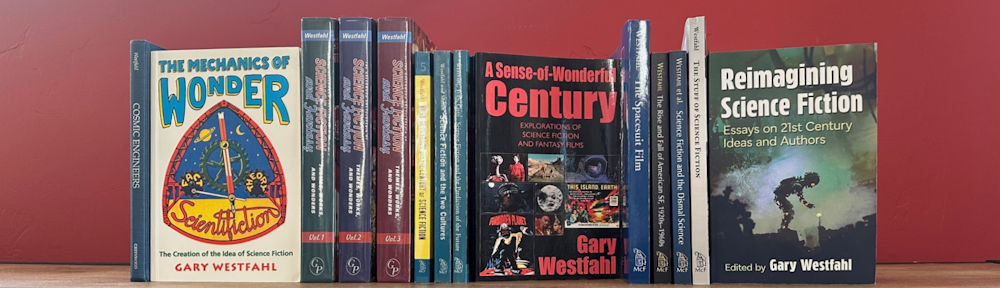
I mention all of these things while fully recognizing that all of these accomplishments were utterly meaningless. For I have my own definition of intelligence: doing something significant, something that contributes to the world. If I had spent my life after high school engaged in no important work, I would be entirely and justifiably forgotten outside of my immediate circle of family and friends; people only remember the people who have important achievements — some which receive public attention, others such as a job well done or contributions to charity that are appreciated by those who know about them without wider recognition. So, after a decade of relative idleness, I realized this truth at the age of thirty-seven and started to work hard to have an impact on society. And today, if asked to prove my intelligence, I could simply point to my five-shelf bookshelf with the thirty-eight books I have published and the books, journals, and magazines containing my hundreds of articles and reviews.
I think of this when I recall one memorable event in 1999.
My colleague George Slusser had been asked by the local MENSA society to give a talk on what science fiction had predicted about the twenty-first century, but he decided not to go, and I was recruited to replace him. Always seeking to take a novel approach to an assigned topic, I had the idea of giving a presentation about the various ways that science fiction has failed to predict the future. I wrote the paper and, on one April afternoon, I arrived at the MENSA meeting place and began reading what I had written.
The MENSA members constituted the rudest audience I have ever encountered in my life. After virtually every sentence I read, someone in the audience shouted out some objection, usually trivial. It was a genuine ordeal to get through my presentation, having to constantly pause to defend something I had just said. And something occurred to me: these people were not interested in what I had to say. Instead, they were determined to prove to everyone else in the room that they were much smarter than this purported expert that they had invited to speak.
And I felt sorry for them. For I had never heard of any of them; they had never accomplished anything significant, at least anything known to people beyond their little worlds. Maybe some of them are wonderful people who are stars of their profession or cherished volunteer workers — but I rather suspect that they are the kind of people who would rather spend their time congratulating themselves for solving another puzzle. For their main priority, it appears, is that they constantlu want to show other people that they were smart, and having a card in their wallets saying that they are members of MENSA is one way to show people that they are smart. But I don’t need to impress small groups of people by bragging about my intelligence of publicly contradicting someone else; I don’t need a card in my pocket to testify to my intelligence. I can just tell people to Google my name on the internet and find the innumerable references to my many books and articles.
(As for the paper I presented: I wrongly concluded from the hostile reception I received that the paper was somehow flawed, and I sat on it for ten years, occasionally revisiting it in an effort to improve it, until I finally submitted it to Locus Online in February, 2009, now titled “Pitfalls of Prophecy: Why Science Fiction So Often Fails to Predict the Future.” The editor Mark R. Kelly posted it and said he thought that it was the most important analysis of science fiction predictions since Arthur C. Clarke’s Profiles of the Future [1962]; it was praised by several readers; it was republished in one critical anthology I co-edited; and a translated version was selected to appear in the German anthology Das Science Fiction Jahr 2013. All in all, impressive results for a paper that all the smart people in MENSA didn’t want to listen to.)
Today, a certain prominent person (I won’t mention his name) repeatedly says that he is very intelligent; but as many have observed, truly intelligent people never say that they are intelligent, since their careers demonstrate their intelligence beyond a doubt. I have violated that principle on this one occasion to make a point, but I will immediately return to silently establishing my intelligence with my work, not my mouth.

